
By Bookum Team, Feb 24, 2026
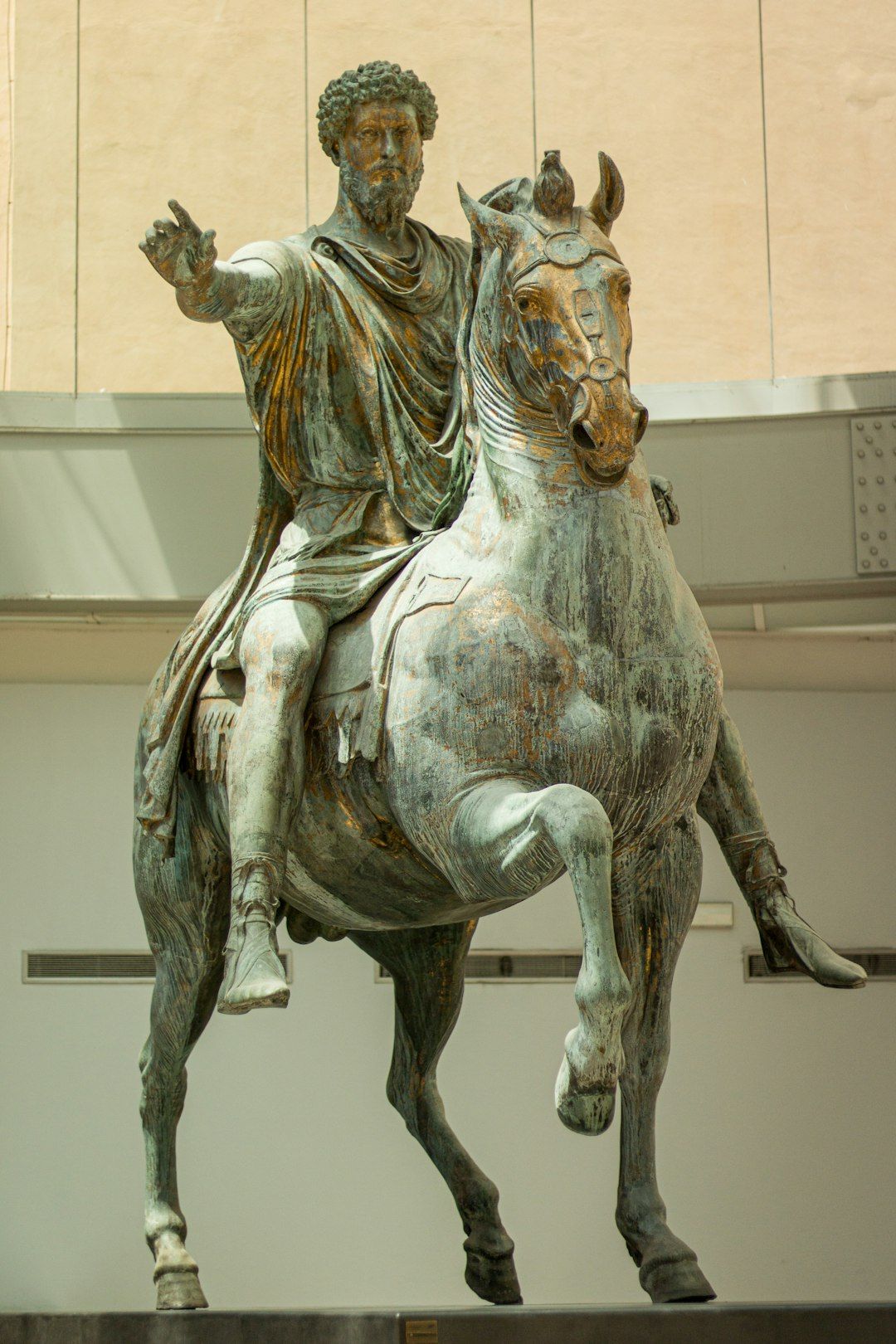
There is a reason there’s that running joke on Tiktok “How Often Do Men Think About the Roman Empire” went so viral.
It is not really about legions or marble statues.
It is about willpower. Discipline. Order. A time when virtue felt like something you could train.
But the most powerful man in the world at that time [Marcus Aurelius] was not only thinking about conquest when he woke up.
He was thinking about how not to lose his temper.
How not to become arrogant.
How to tolerate people he found exhausting.
Nearly 2,000 years later, Meditations by Marcus Aurelius is still circulating among founders, athletes, creators, and anyone trying to build something without losing themselves in the process.
I sat down with Dr. Aaron Poochigian, poet and classicist, about his new translation of the book and why this ancient text feels strangely calibrated for the modern world.
https://youtu.be/TUuy42s3MuE?si=hxiGgOnaMQjPoMkr (Watch on Youtube)
The Moment Everything Shifted
I asked Dr. Poochigian how this started.
He did not say graduate school. He did not say a mentor.
He said this:
“When I was 18, I was looking at a humanities textbook on the Greeks and Romans. It started with a quote from Virgil’s Aeneid. I did not know Latin. I just sounded the words out.
And I swear to God, the light got brighter. It was a religious experience.
I knew: I am supposed to be a poet. I am supposed to learn Greek and Latin.
For richer or poorer, usually poorer, that is what I have done since.”
Why Marcus Wrote in Greek
Marcus was the 16th Roman Emperor. Yet he wrote Meditations in Greek (not the roman common language of Latin).
That was not accidental.
Greek was the language of philosophy. Latin was the language of law, contracts, administration. At the young age, Marcus Aurelius was taught Greek as an educational pursue. If you wanted to talk precisely about Stoic metaphysics, Greek had the vocabulary.
But something else gets lost in that explanation.
Greek allowed texture.
And texture is what many modern translations smooth out.
It Was Never Suppose to Be Read By The Public
“Formal, classicizing translations make Marcus sound like white marble. Distant and reserved.
But he uses slang. He talks about bodily functions. He rants. He contradicts himself.
This was not written for publication. He did not expect anyone to read it.
That changes everything.”
That detail matters.
This is not a public speech like those commissioned under Augustus.
This is not a polished philosophical treatise.
It is a man arguing with himself in a war tent.
The Three Voices Inside Meditations
One of the most useful frames Aaron offered was this: the book has multiple voices.
There is the Instructor.
There is the Aspirant.
There is the Objector.
The Instructor is stern. Uses “you.” Commands himself.
The Aspirant says “I.” Reflects. Admits weakness.
The Objector pushes back. Raises doubt. Challenges the ideal.
“Rather than Marcus laying down the law, I saw it as dramatic.
These voices contradict each other. They interact.
He insists on loving humanity. Then you see him being nasty and suspicious in other passages.
He pressures himself to tolerate everyone. And then fails.”
That is human. Even at the level of Emperor, Marcus Aurelius encountered personal faults.
Why It Still Resonates
I asked him why high performers still pass this book around.
“We have emails, texts, constant stimulation. There is a general feeling of overstimulation.
The meditations teach you what is a distraction and what is not.
They allow you to mentally separate the noise and focus on virtuous action.”
The format helps. Short entries. Fragmentary thoughts. No long argument to track.
You can open to any page and begin.
In a world where attention is fractured, that design is not accidental. It is usable.
Translating Philosophy Is Not Just Language
Some words do not cross over cleanly.
Logos is one of them.
It is the rational principle ordering the universe. Intelligence is too thin. Rationality is incomplete.
So Aaron leaves it untranslated.
Psyche is another.
Marcus uses it to mean breath, mind, soul. But not soul in the later Christian sense. For him it is material. It dissolves when the body does.
Translation here is philosophical alignment, not just vocabulary.
The Virtue He Struggled With
Marcus ranks justice as the highest virtue.
But the one he struggled with most was tolerance.
“He says if you cannot teach people, tolerate them.
And then you see him being dismissive of fame-seekers, theatrical people, those who do not live according to nature.
He pressures himself to love everyone.
That is a high standard.”
It is easy to admire Stoicism when life is calm.
It is harder when you are leading an empire at war.
When the Book Hits Differently
Dr. Poochigian first read Meditations at 24 and did not like it.
He wanted Emotion.
It felt restrained.
Years later, after harder seasons, it changed.
“He helped me let go of things.
I cannot change the past. I can apologize. That is all I can do.
Then I move on.
It worked.”
That is the through line.
The book does not remove difficulty.
It removes illusion.
Control what is yours. Release what is not.
A Final Lesson for Writers
I asked him what belongs in a writer’s toolkit.
His answer cut against the usual advice.
“You are told to find your voice. The one voice you will write in your whole career.
I warn writers against that.
If you find one voice, you can exhaust it.
Find voices.
Different ranges. Different registers.
I have written in drag. I have translated Sappho. I have written for the stage.
Those voices enrich my own.”
Marcus had more than one voice.
Maybe that is why the book endures.
If you have only read the older translations of Meditations, this one feels different.
And that difference is everything.
Get your Copy of Dr. Aaron Poochigian’s New Translation of Meditations Today!
Watch the full podcast here or listen on Apple, Spotify, and all podcast platforms!