
By Kyle Colley, Mar 8, 2026
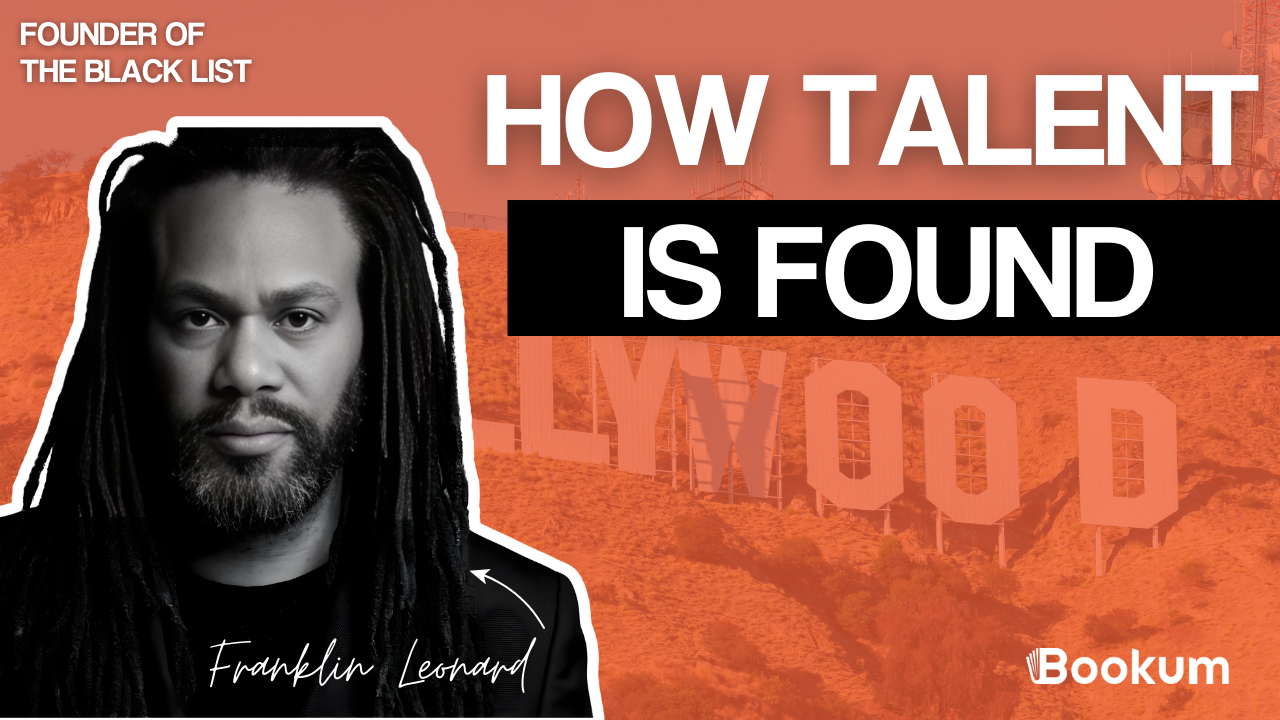
Hollywood is going through one of its strange moments.
Studios are merging, streaming economics are still shifting and Artificial intelligence is everywhere. Every week there seems to be a new headline about the future of film.
But underneath all of that noise, the real question has not changed.
How do great stories (and talent) actually get discovered?
That question is what led Franklin Leonard to create The Black List in 2005. What started as a simple survey of Hollywood executives asking for their favorite unproduced screenplays eventually became one of the most influential discovery platforms in the film industry.
Films like Slumdog Millionaire, The King’s Speech, Argo, The Wolf of Wall Street, and King Richard all appeared on the list before reaching the screen.
Today the platform has expanded beyond screenplays. Fiction writers can upload novels and manuscripts as well, creating a new way for great work to get discovered in literature.
We sat down with Franklin to talk about the future of film, the discovery problem in storytelling, and what writers actually need to focus on if they want to succeed.
And the biggest takeaway was simple.
Great talent exists everywhere. The real challenge is building systems that help us find it.
Why Franklin Leonard Is Still Optimistic About Film
Kyle (One of our Co-Founder of Bookum) started the conversation by asking Franklin about a recent essay he wrote on Substack about the future of film.
Why stay optimistic when Hollywood seems so uncertain?
Franklin gave a simple answer.
“The main reason I am optimistic about the future of film is that I have a great deal of faith in artists.”
For Franklin, the future of movies has less to do with executives making perfect decisions and more to do with the fact that great storytellers continue to exist.
Every year.
Everywhere.
He told us a story that illustrates this perfectly.
Several years ago he came across a video online showing a group of teenagers in Kaduna State, Nigeria making science fiction short films.
They were using equipment most people in the United States would throw away.
Old phones. Old laptops.
But the films were impressive.
“I retweeted it and asked if anyone could connect me with them,” Franklin said. “The next day they replied and said, ‘We are right here.’”
They jumped on a Skype call. This was before Zoom.
The teenagers warned him that the electricity might cut out during the conversation.
But once the conversation started, Franklin realized something quickly.
These kids were serious filmmakers.
“They were talking about directors like Fincher and critiquing his work. And I remember thinking these are teenagers in Kaduna State and I am talking to them like film students.”
Six and a half years later those same filmmakers premiered their first feature at the Berlin International Film Festival.
https://deadline.com/2026/02/crocodile-interview-berlin-film-festival-documentary-1236724848/
Franklin (still to this day has not meet them in person) watched it unfold from Los Angeles on his phone and laptop.
“When you see that level of talent rise once the resources are available, it is hard not to be optimistic.”
Why “Be So Good They Cannot Ignore You” Is Not Enough
Creative advice often sounds simple.
Steve Martin is famous for saying, “Be so good they can’t ignore you.”
Franklin pushed back on that idea in the podcast.
“With no disrespect to Steve Martin, that advice is easier when the standard for being good is different.”
If your parents work in Hollywood, the bar is different than if you are a teenager making films in Nigeria.
What Franklin wants is a world where that standard is consistent.
“I want a world where the standard for being so good they cannot ignore you is the same everywhere.”
Because when that happens something powerful occurs.
The best stories rise.
And audiences benefit.
Movies Are Thriving Even If Hollywood Is Confused
Kyle asked Franklin a question about the state of the Movie industry.
Was 2025 a good year for movies?
Franklin laughed.
“Absolutely. I challenge anyone to tell me when there has been a bad year for movies.”
He draws a distinction that many people miss.
Movies and Hollywood are not the same thing.
Movies are the art.
Hollywood is the business system that funds and distributes the art. (Byron Allen is famous for saying, “it’s not show business, its business show.” Business comes before everything.
And right now that business system is still figuring itself out.
Streaming economics are complicated, studios, like Warner Brothers/Paramount are restructuring, and technology continues to shift how films are made and distributed.
But great movies continue to appear every year.
“I would say it was a great year for movies. Hollywood is a little more complicated.”
The Advice Every Writer Needs To Hear
One of the most practical parts of our conversation came when we asked Franklin what writers should actually focus on.
His answer was direct.
“If you write something amazing, there will always be a market for that which is amazing.”
Writing has a unique advantage compared to other creative roles in filmmaking.
If you want to direct, you need infrastructure and money.
If you want to act, someone needs to cast you.
But writing is different.
“You can lock yourself in a room with pen and paper and write something great.”
However that freedom comes with a responsibility.
Franklin compared writing to professional sports.
“People understand that to be a professional athlete you have to be one of the best in the world.”
“No one says they should be playing in the NBA just because they have a decent jump shot.”
And here is the reality that shocked us that Franklin illuminated.
There are actually fewer screenwriters who get a movie made each year than professional athletes in America.
So the standard is extremely high.
“If you want to be a screenwriter you should aspire to be as good at writing as Steph Curry is at basketball. Or at least good enough to guard him.”
How The Black List Actually Started
Many people are familiar with the The Black List origin story. But we wanted to understand it from a startup perspective. How he got early adaptors, readers etc.
Franklin was working as a development executive and drowning in scripts.
So he sent out an anonymous email asking a simple question.
What is your favorite unproduced screenplay?
The responses poured in.
Because the question solved a real problem.
Everyone in Hollywood was trying to find the best material. No one had time to read everything.
Franklin compiled the responses into a list.
And something interesting happened.
People found it incredibly useful.
“It was not a pitch,” he said. “It was a utility.”
When something solves a real problem, people adopt it quickly. In the words of Y-Combinator founder Paul Graham “Make something people want.”
That simple idea eventually became one of the most influential discovery platforms in film.
Franklin Leonard’s Definition of Taste
We also asked Franklin how he thinks about taste and curation.
His answer was one of the most interesting frameworks in the entire conversation.
“Taste is pattern recognition plus courage.”
Pattern recognition comes from exposure.
Franklin has spent decades reading scripts, watching films, and talking with writers, producers, and directors.
Over time you develop an internal sense of what great storytelling looks like.
But the courage part is just as important.
Real taste means being willing to champion something before everyone else agrees.
“You have to be willing to walk into the town square and say people should pay attention to this.”
And sometimes that means being wrong.
But that risk is part of the job.
Thinking In Systems For Solving The Problem
Franklin believes Hollywood does not have a talent problem.
It has a discovery problem.
“The problem was never that Hollywood lacked talented writers.”
The real issue was the system used to identify those writers.
For a long time the industry rewarded proximity.
Where you lived.
Where you went to school.
Who you knew.
Franklin describes The Black List in simple terms.
“Curation at scale is really just a sorting problem.”
There is more creative supply than anyone can process.
So the question becomes how to build systems that sort that work more fairly.
What should matter is simple.
Did you write something great?
The Book World Has The Same Problem
One of the reasons The Black List expanded into books is because the publishing industry faces a similar challenge.
There are tens of thousands of talented writers with manuscripts that never reach agents or editors.
The goal of the platform is to create a place where work can be evaluated based on quality rather than connections.
Editors, agents, producers, and studios can discover great writing in the same place.
And when that happens something powerful occurs.
Writers get leverage.
Because demand exists across multiple industries.
Our Biggest Takeaways
After talking with Franklin Leonard, a few ideas stood out to us.
1 - Great Talent is Global.
The next generation of great filmmakers and writers may be anywhere in the world.
2 - Writers (Screenwriters especially) Need to Aim Higher than They Think.
If you want to compete in storytelling, the bar is closer to Steph Curry than a casual pickup game. You have to work at your craft, the way a professional athlete works at theirs. Write as much as possible. Study great writing and of course read!
3 - Taste and Curation are Learnable Skills.
You build them by exposing yourself to the best art, the best stories, and the best creators you can find.
Over time you develop pattern recognition.
Then comes the harder part.
Having the courage to champion great work before everyone else sees it.
Because if the system works correctly, great stories should not depend on where you live or who you know.
They should depend on what you put on the page.
Check out the full podcast episode with Franklin Leonard. Also, make sure to download our new social book club and book networking app Bookum at https://www.bookumapp.com