
By Bookum Team, Apr 7, 2026
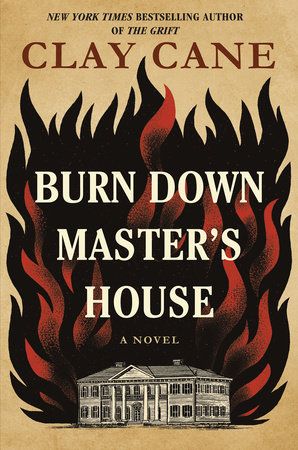
Burn Down Master’s House by Clay Cane is a brutal, unflinching novel that refuses to sanitize the truth of American slavery. Through interconnected stories of resistance, survival, and systemic betrayal, the book forces readers to confront the full weight of history while asking what it truly means to fight for freedom.
Whether you are reading with your current book club or looking to start and host one on the Bookum App, these discussion questions are designed to push deeper conversations about truth-telling, resistance, identity, and the legacy of slavery that still shapes the present.
Truth, History, and the Erasure of Slavery
1 - The novel pushes back against the “downplaying” of American slavery. Where do you see modern parallels to this erasure in media or education?
2 - What does the book suggest about the importance of truth-telling, even when the truth is painful or difficult to confront?
3 - The story presents slavery as a system, not just individual acts of cruelty. Why is this distinction important?
4 - How does the novel challenge simplified narratives of slavery that reduce it to a few symbols or moments?
5 - The idea that “remembering is an act of opposition” appears throughout the book. How does memory function as resistance?
6 - Why is it important that this novel does not “sugarcoat” the brutality of slavery? Who is that honesty for?
Violence, Power, and Dehumanization
7 - The novel depicts slavery as a framework of total dehumanization. What moments most clearly illustrate that a “life that is not lived”?
8 - How does the book portray sexual violence as a tool of control within slavery?
9 - The phrase “we’re not making babies, we’re making slaves” is deeply disturbing. What does it reveal about the economics of slavery?
10 - Why do you think Cane chose not to center the N-word, instead emphasizing the full system of brutality?
11 - The novel includes graphic violence that can be difficult to read. Do you think this level of detail is necessary? Why or why not?
12 - How do moments of extreme violence compare to quieter forms of control and manipulation in the book?
Resistance, Rebellion, and Survival
13 - Characters like Luke, Henry, Ruby, and Josephine resist in different ways. Which forms of resistance felt most powerful to you?
14 - Josephine’s decision to poison the Bayner family is a turning point. How do you interpret this act morally and symbolically?
15 - The burning of the house happens multiple times across the narrative. What does “burning down” represent beyond physical destruction?
16 - “Live on your knees, or die on your feet.” How does this idea show up in different characters’ choices?
17 - Ruby is described as someone who fights slavery every day. What makes her resistance unique compared to others?
18 - How does the novel balance survival with rebellion? Is survival itself a form of resistance?
Complicity, Betrayal, and Moral Complexity
19 - Clara sees herself as an abolitionist, yet she is still complicit in slavery. How does the novel challenge readers to rethink what it means to be “good”?
20 - Larkin places hope in the legal system. What does his story reveal about trusting systems that were built to oppress?
21 - The court ruling that returns Charity to slavery is devastating. What does this moment say about the law as a tool of power?
22 - Nathaniel, a Black slave owner, represents a disturbing contradiction. How does his character complicate the narrative of slavery?
23 - Several characters help others but also cause harm. Do you think the novel allows for redemption, or does it reject that idea?
24 - By the end of the novel, what is the central message about resistance? Does the book leave you with hope, anger, or something else entirely?
Download Bookum and add Burn Down Master’s House to your TBR list to start or join a conversation today.